
Challenges & Success Stories in Cross-Continent Trade
The most successful players in Import & Export are those who treat trade as integrated product + logistics + finance exercises.
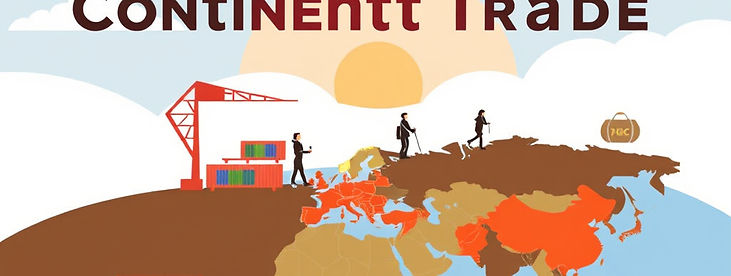
Trading between the Netherlands and East Africa is rich with opportunity — and full of operational friction. The most successful players are those who treat trade as integrated product + logistics + finance exercises.
Major challenges
Logistics & shipping disruption: geopolitical tensions and changes in key maritime routes have periodically forced shipping lines to reroute (e.g., Red Sea security concerns), increasing transit times and freight costs and requiring firms to plan longer lead times. These disruptions ripple into inventory and pricing decisions for SMEs trading perishable goods or tight-margin commodities. Reuters
Port congestion & inland transport: European port congestion and low Rhine water levels can add delays and costs, affecting landed cost calculations and inventory turns.
Regulatory and compliance complexity: e-customs platforms, differing phytosanitary rules, and evolving country regulations (e.g., e-invoicing in some African markets) create administrative overhead.
Currency & finance: FX volatility and limited SME-friendly hedging options create margin risk.
Success patterns
Local partnerships: exporters and importers who lock trusted freight and customs partners reduce dwell time and claim costs.
Hybrid channels: combining auctions/marketplaces with direct contracts builds resilience.
Digital adoption: early adopters of e-customs filing, digital invoices, and freight-visibility tools saw lower dwell times and faster dispute resolution.
Value chain investment: Dutch-East African partnerships that invest in post-harvest handling or processing (e.g., coffee milling, flower cold chain) capture more value inside the exporting country and stabilize supplies.
Latest developments to watch
Expect continued attention on trade lane resilience and digital trade facilitation as both EU and African governments push modernization agendas. Logistics providers increasingly offer bundled FX/landed-cost tools that help SMEs price more accurately and react to disruptions faster.
Call to action
Map your weakest link: logistics, finance, or compliance. Choose one — and solve it this quarter: sign a 6-month SLA with a freight partner, pilot an e-customs filing, or open a multi-currency account with a fintech that supports EUR↔KES/EUR↔ETB. Small operational fixes can unlock significant margin and reliability gains.
Comments / Your input
What operational disruption hurt you most in the last 12 months — shipping delays, a customs rejection, or FX movement? Tell us in one sentence; we’ll share a community playbook of fast fixes.
Subtopics
More in this category

Case Study: Ethiopia
Ethiopia’s renowned coffee sector partnered with Dutch blockchain and logistics firms to launch a traceability project.

Case Study Uganda: Coffee Supply Chains Linking to Dutch Roasters
A leading Dutch roaster partnered with a Ugandan cooperative helping farmers raise cupping scores and earn premium prices.

Case Study Kenya: Dutch–Kenyan Partnership
A collaboration between Dutch agribusiness investors and Kenyan farmer cooperatives helped boost yields, ensure EU-standard compliance...

How a Kenyan Flower Exporter Succeeded in the Dutch Market
Success in the Dutch market today requires more than volume: it demands quality, sustainability credentials, strong logistics partners, and creative channel strategy.

Case Study Tanzania: Cashew Export Modernization Supported by Dutch Buyers
Dutch buyers partnered directly with Tanzanian processors to increase quality, packaging standards, and export readiness.

Lessons from a Dutch SME Importing East African Coffee
Companies that succeed in coffee exports combine quality sourcing, value-added relationships with cooperatives, and resilient logistics.
Related content

Articles on Trade , Logistics and Market Trends
Staying current with trade, logistics and market-trend articles is essential in the global trade enviroment. They help to highlight emerging opportunities.

Trade Policy, Geopolitics & Supply Chain Resilience
For companies engaged in trade, now is the time to invest in resilient, digitally-enabled supply chains.

Case Studies
Case studies provide real-world examples of how businesses and development partners collaborate to unlock trade potential.
Regional Trade Agreements: New Frameworks Creating Practical Opportunities
The rise of regional trade agreements (RTAs) is reshaping how East Africa and the Netherlands connect economically.

Digitalization in Trade: Blockchain, Finance Innovation, and Compliance Tools
Digitalization is about creating a fully connected, data-driven ecosystem across the entire international supply chain.
Main categories

Global Trends: The New Architecture of International Trade
A complex interplay of geopolitical shifts and technological breakthroughs have fundamentally restructured how goods and services move across borders.

Boost Your Business Today
In today’s fast-paced world, growth is about more than just having a great idea — it’s about making the right connections, sharing knowledge, and creating opportunities.

Resources for Import & Export
Resources for Import & Export” brings together practical information and digital assets that help businesses navigate the complexities of international trade.