
New Market Trends in Netherlands–East Africa Trade
Understanding market trends is essential for companies, policymakers and investors because trends determine where demand is growing.
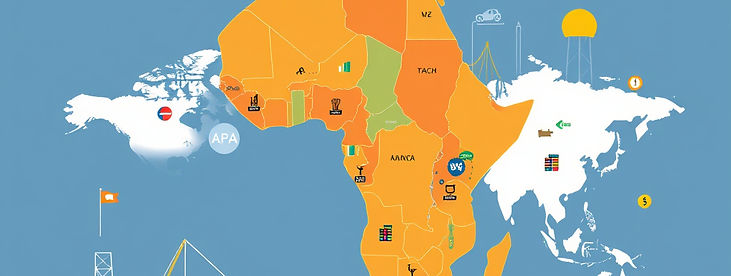
Understanding market trends is essential for companies, policymakers and investors because trends determine where demand is growing or shrinking, which value chains are profitable, and what infrastructure or compliance investments are required. For the Netherlands and East Africa, trends matter not only for bilateral trade volumes but for jobs (e.g., floriculture and coffee supply chains), logistics (ports, cold chains), and regulatory exposure (EU rules on plant/food safety and sustainability).
New, cross-cutting trends to watch
1. Commodity and agricultural price shifts — Higher global prices for key commodities (coffee, gold, some cash crops) have strengthened export receipts in parts of East Africa, helping governments and exporters but also increasing the need for value-addition and quality control.
2. Market diversification and direct routes — East African exporters are increasingly selling to a broader set of markets beyond the EU, and some supply chains (notably cut flowers) are beginning to bypass traditional Dutch auctions or transshipment routes in favour of direct or alternative-market sales. This reduces the Netherlands’ historical intermediary role in some product flows.
3. Stricter regulatory and sustainability requirements — EU phytosanitary and pesticide rules, plus rising demand for sustainability certification (carbon, labour standards), force exporters to upgrade practices or risk rejections and quarantine — with concrete economic impact in sensitive sectors such as roses and fresh produce.
4. Logistics and cold-chain investment — Growth in perishable exports (flowers, avocado, fish, fresh vegetables) is driving investment in cold chains, refrigerated transport and faster customs processes across East Africa — a necessary condition to scale exports to Europe and beyond.
5. Regional integration and intra-African trade — Rising intra-African trade and improved regional corridors mean East African exporters can scale regionally first, which changes volumes and seasonal flows to external partners like the Netherlands.
How these trends apply to Netherlands ↔ East Africa trade
• Traditional strengths remain, but the roles are evolving. The Netherlands continues to be a major European gateway and value-add partner for East African horticulture and certain agricultural products (air/sea logistics, auction platforms, re-exports of processed goods). In 2024 the Netherlands still recorded significant export and import flows with East African countries (for example trade with Kenya remained sizeable in agricultural lines). However, the share of some flows routed through the Netherlands is shifting.
• Floriculture (flowers and cuttings): Kenya’s flowers have been a core link to Dutch markets and auctions for decades, but recent enforcement of EU plant-health rules and commercial rerouting have reduced volume share going through Dutch channels. Dutch companies remain important for logistics, auction expertise and high-value market access, but Kenyan exporters are hedging risk by diversifying destinations and improving on-farm controls.
• Coffee, tea and specialty crops: Rising global prices and quality-focused demand increase opportunities for East African producers to capture more value. Dutch traders and roasters remain buyers and processors, but exporters who can meet traceability and sustainability standards capture better margins.
• Industrial and services exports from the Netherlands: Machinery, agro-processing equipment, cold-chain solutions, and financing services are demand areas. Dutch firms can expand by offering end-to-end solutions: equipment plus training and after-sales, and by partnering with regional finance institutions to overcome working-capital constraints.
Practical takeaways
For Dutch firms and East African exporters:
focus on compliance and traceability, invest selectively in cold-chain logistics, and explore direct commercial relationships alongside traditional auction/re-export models.
For policymakers:
support export quality programs, streamline phytosanitary processes, and incentivize investments that retain more value locally (processing, packaging).
Finally, monitor regional developments — a stronger East African market and rising alternative export routes will continue to reshape trade patterns with the Netherlands.
Short outlook: Expect continued growth in agricultural and commodity exports from East Africa (helped by higher prices and regional trade), continued Dutch demand for quality perishable goods and processed inputs, and a structural shift toward diversified market channels and upgraded logistics — all of which create opportunities for new commercial partnerships but require stricter compliance and investment in cold-chain and value-addition.
👉Interested in learning more about these topics?
Explore a detailed description of each topic in the section below, “Subtopis”
👉Share your experiences and lessons
Your experience and perspectives are crucial in ensuring the reports remain accurate, practical, and beneficial for all stakeholders engaged in trade between the Netherlands and East Africa.
You are encouraged to share your experiences, insights, and opinions by using the comment form on the page. In addition, you may submit supporting materials such as PDF documents or contribute more extensively through our blog section.
Subtopics

Regional Integration and Trade Transformation in Africa
The launch of the AfCFTA ( The African Continental Free Trade Area), marked a structural shift by aiming to integrate all 55 African countries into a single market.

Market diversification and direct routes
East African exporters are increasingly reducing their dependence on traditional European gateways by targeting new markets in the Middle East, Asia, and within Africa itself.

Logistics and cold-chain investment - The Backbone of Perishable Trade
The rapid growth of perishable exports—such as flowers, avocados, fish, and fresh vegetables—has made logistics a central pillar of trade between East Africa and the Netherlands.

Commodity and Agricultural Price Shifts
Commodity markets have entered a period of heightened volatility, with price increases in products such as coffee, tea, and minerals benefiting many East African economies.

Stricter Regulatory and Sustainability Requirements
Rules on food safety, pesticide residues, and sustainability —driven by initiatives such as the European Union’s Green Deal - are raising the bar for exporters.
More in this category

New Global Trends in Import & Export
In the global import-export landscap several trends have become more prominen. Understanding the new Import & Export trends is key for exporters, importers, logistics providers, and everyone in between.

Business Profile: Trade Innovators, companies redefining import–export
Our “Trade Innovators" entries highlight exemplary businesses—those redefining what is possible through creativity, adaptability, and smart technological adoption.

How AI- related Tech is transforming Import & Export between The Netherlands and East Africa
Artificial intelligence (AI), automation, and data-driven technologies are rapidly reshaping global trade.

The Rise of Advanced Import / Export Databases & Tools
For businesses trading between the Netherlands and East Africa, managing and sharing accurate, real-time data has become just as important as moving goods themselves.
Related content

Fostering Growth: Strategies to Expand Your Business
The ability to expand operations, reach new markets, and strengthen partnerships is what transforms small ventures into thriving enterprises.

Logistics & Customs: A Practical Guide for Trade
Strong logistics management and accurate customs handling are essential to ensure that products arrive on time, at the right cost, and in full compliance with both EU and East African regulations.

Articles on Trade , Logistics and Market Trends
In a rapidly evolving global trade environment, market-trend articles highlight emerging opportunities and risks, promote knowledge exchange and support informed decision-making.

EU Food Safety & Product Standards (Guide)
Exporting food or agricultural products to the Netherlands requires compliance with strict EU regulations, such as the General Food Law, designed to protect consumers and ensure product quality.

Practical Advice & Tips for Firms and Traders on Finance, Compliance, Shipping, and Partnerships
Trade opportunity comes with real complexity — shifting regulations and changing demand patterns — which makes practical, actionable advice indispensable for firms and traders on both sides.

Trade Statistics-Netherlands-East Africa (2025 )
Recent years have seen growing interest in African agricultural, horticultural, and value-added products entering the Dutch and wider European markets.
Main categories

Global Trends: The New Architecture of International Trade
In the global trade a complex interplay of geopolitical shifts, technological breakthroughs, and a new "green" mandate has fundamentally restructured how goods and services move across borders.

Boost Your Business Today
In today’s fast-paced world, growth is about more than just having a great idea — it’s about making the right connections, sharing knowledge, and creating opportunities.

Resources for Import & Export
Resources for Import & Export” brings together practical information and digital assets that help businesses navigate the complexities of international trade.