
Reshoring, Nearshoring, & Diversifying Supply Source
The trends of reshoring, nearshoring, and supply chain diversification are creating a new chapter in economic cooperation between the Netherlands and East Africa.
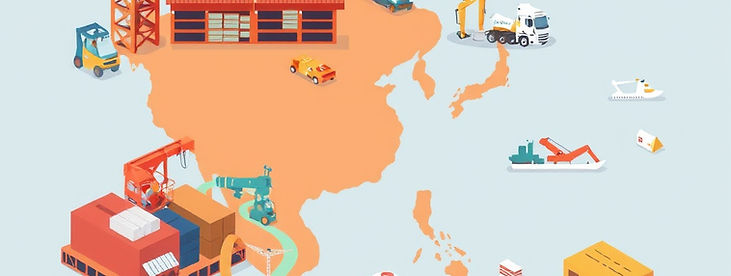
Global trade patterns are changing rapidly as businesses reassess how and where they produce, source, and distribute goods. Rising geopolitical tensions, shipping disruptions, climate concerns, and the lessons learned from the COVID-19 pandemic have encouraged companies to build more resilient and sustainable supply chains.
In this context, the concepts of reshoring, nearshoring, and supply source diversification are becoming increasingly important in trade relations between the Netherlands and East Africa.
Understanding the Concepts
Reshoring refers to the process of bringing manufacturing or production activities back closer to a company’s home market after previously outsourcing them to distant countries. European companies are increasingly reconsidering long global supply chains due to risks related to transport costs, delays, and geopolitical instability.
Nearshoring involves relocating production or sourcing to countries that are geographically closer or strategically better connected to the target market. While East Africa is not geographically “near” Europe in the traditional sense, improved logistics links, trade agreements, and digital trade systems are positioning the region as a strategic alternative supply base for European companies.
Diversifying Supply Sources means reducing dependence on a single country or supplier by building multiple sourcing channels across different regions. Businesses are increasingly seeking diversified sourcing strategies to improve resilience, flexibility, and continuity of supply.
Together, these trends are reshaping commercial partnerships between the Netherlands and East Africa.
Supply Chain Diversification
One of the most significant developments is the growing effort by European companies to diversify supply chains beyond traditional Asian manufacturing hubs. Dutch importers and manufacturers are exploring East Africa as a complementary sourcing region for agricultural products, textiles, leather goods, minerals, and light manufacturing.
Countries such as Kenya, Tanzania, Ethiopia, Rwanda, and Uganda are attracting attention because of their growing industrial capacity, strategic trade corridors, and expanding regional integration under the African Continental Free Trade Area (AfCFTA).
For Dutch businesses, diversification reduces overreliance on single-market sourcing and improves operational resilience. For East African economies, it creates opportunities for export growth, industrial development, and employment generation.
Investment in Local Processing
Another major trend is increased investment in local value addition and processing within East Africa. Rather than exporting raw agricultural or mineral commodities alone, governments and investors are encouraging more local processing before products enter European markets.
Dutch companies are well positioned to support this transition through expertise in agritech, food processing, cold-chain logistics, water management, packaging technology, and renewable energy solutions.
For example, instead of exporting unprocessed coffee beans or raw cocoa, East African producers can increasingly participate in higher-value processing activities such as roasting, packaging, refining, and branded export production. This creates stronger regional industries while enabling Dutch importers to access more sustainable and traceable supply chains.
Green Nearshoring
Sustainability is also becoming a central factor in global sourcing decisions. “Green nearshoring” refers to relocating or developing supply chains in ways that reduce environmental impact and support climate objectives.
East Africa offers important opportunities in this area due to its growing investment in renewable energy, sustainable agriculture, circular economy initiatives, and green industrialization. Dutch companies seeking lower-carbon supply chains may increasingly partner with East African producers that utilize solar energy, climate-smart agriculture, and environmentally responsible production methods.
At the same time, the Netherlands continues to play a strategic role as Europe’s logistics gateway, connecting sustainable African supply chains to European consumers through advanced port infrastructure and green transport initiatives.
Why It Matters
Diversification improves resilience and aligns with Dutch sustainability targets while creating jobs in East Africa’s manufacturing sector.
Looking Ahead
The combined trends of reshoring, nearshoring, and supply chain diversification are creating a new chapter in economic cooperation between the Netherlands and East Africa. The relationship is evolving from traditional import-export transactions toward deeper industrial partnerships, regional value chains, and sustainability-driven investment.
As these developments continue to unfold, collaboration and knowledge sharing will become increasingly important.
💬 Tell us: Have you shifted or diversified your sourcing? What lessons have you learned?
👉 We invite you to share your insights, experiences, or questions on this evolving topic:
Leave a comment in our discussion box
Contribute to our blog section
Or submit a detailed PDF document for review and publication consideration
Your perspectives can help shape a broader conversation on the future of sustainable trade and investment between Europe and East Africa.
Latest Articles

Business Opportunities: Building Better Cold Chains

Featured Practical Resources: A Practical Checklist for Verifying an International Business Partner

Important Trade Updates: Kenya Trade Update 2026: Opportunities and Challenges
Most Read

Entering the Import/Export Market: Business Strategies

New Global Trends in Import & Export

How currency fluctuation affect Import & Export Trade
Subtopics
Latest Newsletters

Kenya's Trade Update 2025
2 September 2026
More in this category

Regional Trade Agreements: New Frameworks Creating Practical Opportunities
Trade relations between the Netherlands and East Africa are entering a new phase driven by regional integration, trade facilitation reforms, and digital modernization.

AI-Enhanced Data Exchange Systems: Intelligence at Every Step
' AI-enhanced data exchange systems’ refers to the use of AI to make trade flows faster, more accurate and more secure trough classifying and verifying information automatically.
Tariff Uncertainty, Trade Barriers & Regulatory Risk
Navigating Volatile Markets Fluctuating tariffs, changing regulations, and compliance costs continue to shape trade dynamics.

API-Based Data Exchange Platforms : Seamless Trade Connectivity
API-based are data exchange platforms that enable real-time communication between ports, customs authorities, logistics providers, shipping lines, freight forwarders, and traders.
Related content

Innovation as a growth strategy
Digital platforms are streamlining customs clearance, blockchain is enhancing supply chain transparency, and fintech solutions are simplifying cross-border payments.

Digitalization in Trade: Blockchain, Finance Innovation, and Compliance Tools
From blockchain-enabled traceability to AI-driven compliance systems, digitalization is rapidly reshaping how trade is conducted, financed, and verified.

New Global Trends in Import & Export
In the global import-export landscap several trends have become more prominen. Understanding the new Import & Export trends is key for exporters, importers, logistics providers, and everyone in between.
Entering the Import/Export Market: Business Strategies
International trade between the Netherlands and East Africa is creating new opportunities for entrepreneurs, small businesses, and established companies.

New Market Trends in Netherlands–East Africa Trade
Understanding market trends is essential for companies, policymakers and investors because trends determine where demand is growing.

Building Long-Term Partnerships Across Borders : Business Strategies:
Successful international trade is not built only on products and prices. It depends on strong business partnerships based on trust, communication, and mutual understanding.
Main categories

Global Trends: The New Architecture of International Trade
In the global trade a complex interplay of geopolitical shifts, technological breakthroughs, and a new "green" mandate has fundamentally restructured how goods and services move across borders.

Boost Your Business Today
In today’s fast-paced world, growth is about more than just having a great idea — it’s about making the right connections, sharing knowledge, and creating opportunities.

Resources for Import & Export
Resources for Import & Export” brings together practical information and digital assets that help businesses navigate the complexities of international trade.