
Resilience & Risk Management
In an era of rising geopolitical uncertainty, resilience and risk-management are central to sustaining and growing import-export trade

In an era of rising geopolitical uncertainty, climate shocks, and global trade disruptions, resilience and risk-management are no longer peripheral concerns — they’re central to sustaining and growing import-export trade. For the Netherlands, whose economy is deeply integrated with global value chains, ensuring resilience in trade with East Africa is especially strategic: the region’s rapid economic growth offers opportunity, but also exposes trade to volatility.
Two emerging trends are critical:
1. Flexibility in Logistics & Inventory Strategies — Global carriers and regional actors are increasingly adopting more adaptive logistics models. Rather than relying exclusively on fixed long-haul routes, businesses are diversifying transport options, rebalancing inventory, and localising buffer stocks. This flexibility helps absorb shocks like rerouted shipping, port congestion, or sudden demand swings.
2. Use of Scenario Planning & Stress Testing — Firms and governments are no longer content with planning for the “most likely” future.They are developing multiple scenarios (climate risk, geopolitical rerouting, currency shocks) and stress-testing their supply chains against worst-case events. This forward-looking planning helps to preemptively shore up trade lines, decide where to base inventory, and which routes to prioritise
In the Netherlands–East Africa context, these resilience strategies are particularly relevant. East Africa has been affected by maritime disruptions (e.g., rerouted ships avoiding the Red Sea), and its logistics infrastructure is improving but still fragile. At the same time, Dutch importers of perishable goods, such as horticultural products, rely on cold-chain logistics in East Africa, which are being enhanced with digital tracking and public-private investment.
Call to action: Dutch exporters, importers, and policymakers should embed resilience initiatives in their East Africa trade strategy. Specifically, they should invest in flexible inventory and logistics systems in East Africa, and institutionalise scenario-planning exercises (in both private firms and trade agencies) to stress-test major trade corridors. Engaging proactively in resilience will safeguard trade continuity and unlock further growth opportunities.
👉Share your comments
We encourage you to share your comments, experiences, and input. Your feedback is vital for improving these resources and ensuring they remain practical, up-to-date, and relevant for all stakeholders engaged in strengthening trade between East Africa and the Netherlands.
You can participate by:
• Leaving a comment in our discussion box
• Contributing to our blog section
• Or submitting a detailed document (PDF) for review and publication consideration
Together, we can build a more connected, informed, and prosperous trading environment.
Subtopics
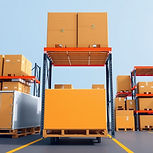
Flexibility in Logistics & Inventory Strategies
Flexibility in logistics and inventory means designing your supply chain so it can change mode, source, timing and storage ...

Scenario Planning & Stress Testing
Scenario planning is the structured creation of plausible futures to test how your supply chain performs.
More in this category

Digitalization in Trade: Blockchain, Finance Innovation, and Compliance Tools
Digitalization is about creating a fully connected, data-driven ecosystem across the entire international supply chain.

Emerging Markets & Shifting Global Demand
Global demand patterns are shifting, Dutch exporters and trade promotion agencies should read the developments correctly and act upon them.

Sustainability, Data & Trade Tech: Redefining Import & Export in a Changing Global Landscape
Meeting CBAM (Carbon Border Adjustment Mechanism) is a gateway to maintaining competitiveness in the EU market.

Trade Policy, Geopolitics & Supply Chain Resilience
For companies engaged in trade, now is the time to invest in resilient, digitally-enabled supply chains.
Related content

Fostering Growth: Strategies to Expand Your Business
The ability to expand operations, reach new markets, and strengthen partnerships is what transforms small ventures into thriving enterprises.

Business Strategies:Building Long-Term Partnerships Across Borders
Successful trade between the Netherlands and East Africa depends heavily on strong, sustainable partnerships.

Logistics & Customs: A Practical Guide for Trade
Efficient logistics and clear customs procedures form the backbone of successful international trade.

Digital Tools Every Importer and Exporter Should Use
Digital transformation is accelerating. Businesses that adopt a small stack of tools can cut friction, speed payments, and reduce compliance risk.

Business Strategies: Entering the Import/Export Market
Importing and exporting between the Netherlands and East Africa offers significant opportunities for small businesses.

Case Study Uganda: Coffee Supply Chains Linking to Dutch Roasters
A leading Dutch roaster partnered with a Ugandan cooperative helping farmers raise cupping scores and earn premium prices.
Main categories

Global Trends: The New Architecture of International Trade
A complex interplay of geopolitical shifts and technological breakthroughs have fundamentally restructured how goods and services move across borders.

Boost Your Business Today
In today’s fast-paced world, growth is about more than just having a great idea — it’s about making the right connections, sharing knowledge, and creating opportunities.

Resources for Import & Export
Resources for Import & Export” brings together practical information and digital assets that help businesses navigate the complexities of international trade.