
Sustainability, Data & Trade Tech: Redefining Import & Export in a Changing Global Landscape
Sustainability reflects how environmental goals, advanced data systems, and emerging trade technolog are interconnected forces shaping modern import and export dynamics.
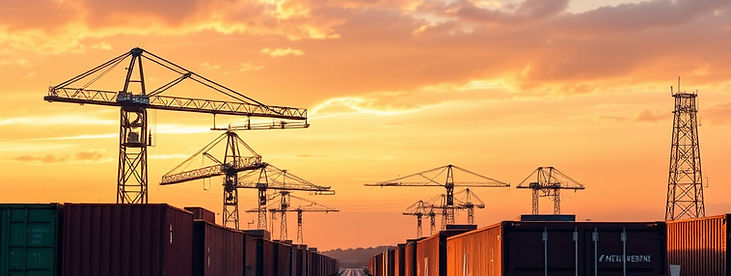
Global trade is undergoing a structural transformation. What was once driven primarily by cost efficiency and speed is now increasingly shaped by sustainability imperatives, data transparency, and technological innovation. Under the broader theme of New Global Trends in Import & Export, the convergence of environmental responsibility, digital infrastructure, and regulatory evolution is redefining how goods move across borders—and who remains competitive in doing so.
At the center of this shift lies a new operating model: one where carbon footprints are measured alongside financial costs, where supply chains are digitally traceable end-to-end, and where compliance with environmental and ethical standards is not optional but foundational. Governments, corporations, and logistics providers are aligning around these priorities, creating a trade ecosystem that is greener, smarter, and more accountable.
The topic of Sustainability, Data & Trade Tech captures this intersection. It reflects how environmental goals, advanced data systems, and emerging trade technologies are no longer separate domains, but deeply interconnected forces shaping modern import and export dynamics.
1. Eco-friendly Imports & Exports
Sustainability is increasingly embedded at the product and production level. Exporters and importers are under growing pressure to reduce emissions, minimize waste, and adopt circular economy principles. This includes sourcing raw materials responsibly, optimizing energy use in manufacturing, and transitioning to sustainable packaging. Markets—particularly in Europe—are rewarding businesses that can demonstrate low environmental impact, making eco-friendly trade not just a moral choice but a commercial necessity.
2. Carbon Border Regulations & Green Logistics
Regulatory frameworks such as the EU’s Carbon Border Adjustment Mechanism (CBAM) are reshaping trade flows by linking market access to carbon performance. These policies are accelerating the adoption of green logistics solutions, including low-emission shipping, alternative fuels, and optimized transport routes. At the same time, they are pushing exporters worldwide to integrate carbon accounting into their operations. The logistics chain is no longer just about delivery—it is a critical lever for emissions reduction and regulatory compliance.
3. Certification, Transparency & Ethical Labor
Trust and accountability are becoming central to global trade relationships. Buyers, regulators, and consumers increasingly demand proof that products are sourced ethically and produced under fair labor conditions. Certification schemes, ESG reporting standards, and digital traceability tools are enabling this transparency. Technologies such as blockchain and AI-driven data platforms allow stakeholders to verify origin, labor practices, and environmental impact with unprecedented accuracy. This shift is elevating ethical compliance from a reputational factor to a market access requirement.
A Converging Future
What unites these three subtopics is the growing role of data and technology as enablers of sustainable trade. Without reliable data, carbon reporting cannot function. Without digital tools, transparency cannot scale. And without innovation in logistics and production, sustainability targets remain out of reach.
As global trade continues to evolve, businesses that integrate sustainability, data intelligence, and trade technology into their core strategies will be best positioned to thrive. Those that fail to adapt risk not only regulatory penalties but also exclusion from increasingly selective international markets.
In this new era, competitiveness is no longer defined solely by price or volume—but by the ability to operate responsibly, transparently, and efficiently in a data-driven global economy.
👉Interested in learning more about these topics?
Explore a detailed description of each topic in the section below, “Subtopis”
👉Join the Conversation
We invite you to share your insights, experiences, or questions on this evolving topic.
• Leave a comment in our discussion box
• Contribute to our blog section
• Or submit a detailed document (PDF) for review and publication consideration
Your perspective can help shape a more sustainable and inclusive trade future.
Subtopics

Eco-friendly Imports & Exports
Greening the Netherlands–East Africa Trade Corridor Sustainability is no longer a side issue in international trade — it’s becoming a core competitiveness factor.
Carbon Border Regulations & Green Logistics
The European Union’s Carbon Border Adjustment Mechanism (CBAM) is reshaping trade worldwide — and its ripple effects are being felt in East Africa.

Certification, transparency, and ethical sourcing
As consumers and regulators demand greater transparency, certification and ethical sourcing have become defining factors in Netherlands–East Africa trade relations.
More in this category

Digitalization in Trade: Blockchain, Finance Innovation, and Compliance Tools
From blockchain-enabled traceability to AI-driven compliance systems, digitalization is rapidly reshaping how trade is conducted, financed, and verified.

Resilience & Risk Management
In an era of rising geopolitical uncertainty, climate shocks, and global trade disruptions,resilience and risk-management are central to sustaining and growing import-export trade.

Trade Policy, Geopolitics & Supply Chain Resilience
As Dutch and East African businesses work to strengthen import and export flows, supply chain resilience has become a strategic priority rather than a technical detail.

Emerging Markets & Shifting Global Demand
Global demand patterns are shifting, Dutch exporters and trade promotion agencies should read the developments correctly and act upon them.
Related content

Stricter Regulatory and Sustainability Requirements
Rules on food safety, pesticide residues, and sustainability —driven by initiatives such as the European Union’s Green Deal - are raising the bar for exporters.

Sustainability as a growth strategy
Sustainability as a growth strategy means using environmental, social, and long-term economic responsibility as a driver of competitiveness, resilience, market access, innovation, and profitability.

Practical Advice & Tips for Firms and Traders on Finance, Compliance, Shipping, and Partnerships
Trade opportunity comes with real complexity — shifting regulations and changing demand patterns — which makes practical, actionable advice indispensable for firms and traders on both sides.

Certification, transparency, and ethical sourcing
As consumers and regulators demand greater transparency, certification and ethical sourcing have become defining factors in Netherlands–East Africa trade relations.

Innovation as a growth strategy
Digital platforms are streamlining customs clearance, blockchain is enhancing supply chain transparency, and fintech solutions are simplifying cross-border payments.

EU Food Safety & Product Standards (Guide)
Exporting food or agricultural products to the Netherlands requires compliance with strict EU regulations, such as the General Food Law, designed to protect consumers and ensure product quality.
Main categories

Global Trends: The New Architecture of International Trade
In the global trade a complex interplay of geopolitical shifts, technological breakthroughs, and a new "green" mandate has fundamentally restructured how goods and services move across borders.

Boost Your Business Today
In today’s fast-paced world, growth is about more than just having a great idea — it’s about making the right connections, sharing knowledge, and creating opportunities.

Resources for Import & Export
Resources for Import & Export” brings together practical information and digital assets that help businesses navigate the complexities of international trade.